Species you will likely encounter
Whales

Brydes whales Balaenoptera edeni
Bryde’s whales (Balaenoptera edeni) are a nationally endangered species found year-round in the Hauraki Gulf, New Zealand, one of the few places in the world where they are resident rather than migratory. They feed mainly on small schooling fish such as pilchards and anchovies, and face threats from ship strikes, noise, and pollution in coastal waters.

Sperm whales Physeter macrocephalu
Sperm whales (Physeter macrocephalus) are regularly found off New Zealand’s South Island, particularly around Kaikōura, where the deep underwater canyons provide rich feeding grounds. They are the world’s largest toothed whales, diving over 1,000 metres to hunt squid, and play an important role in New Zealand’s marine ecosystem and tourism industry.
.jpg)
Humpback whale Megaptera novaeangliae
Humpback whales (Megaptera novaeangliae) migrate through New Zealand waters each year, travelling between their Antarctic feeding grounds and tropical breeding areas in the South Pacific. They are often seen along the east coast of both islands during winter and spring, and are a conservation success story, their populations are steadily recovering after heavy whaling in the 20th century.

Blue whale Balaenoptera musculus
Blue whales (Balaenoptera musculus) are occasionally seen in New Zealand waters, with a distinct population found in the South Taranaki Bight where they feed year-round on krill. They are the largest animals on Earth and are classified as Nationally Endangered in New Zealand, facing threats from ship strikes, noise disturbance, and changes in prey availability due to ocean warming.

Southern Right Whale Eubalaena australis
The Southern Right Whale, or tohorā, is a gentle giant of Aotearoa’s oceans. Once hunted nearly to extinction, these whales have made a slow but inspiring recovery under full protection.
Recognisable by their broad backs, white callosities, and V-shaped blow, tohorā can reach 17 metres in length and live for over 70 years. They migrate along the southern coastlines to feed and give birth, often seen resting with their calves in calm bays.
Dolphins

Common dolphin Delphinus delphis
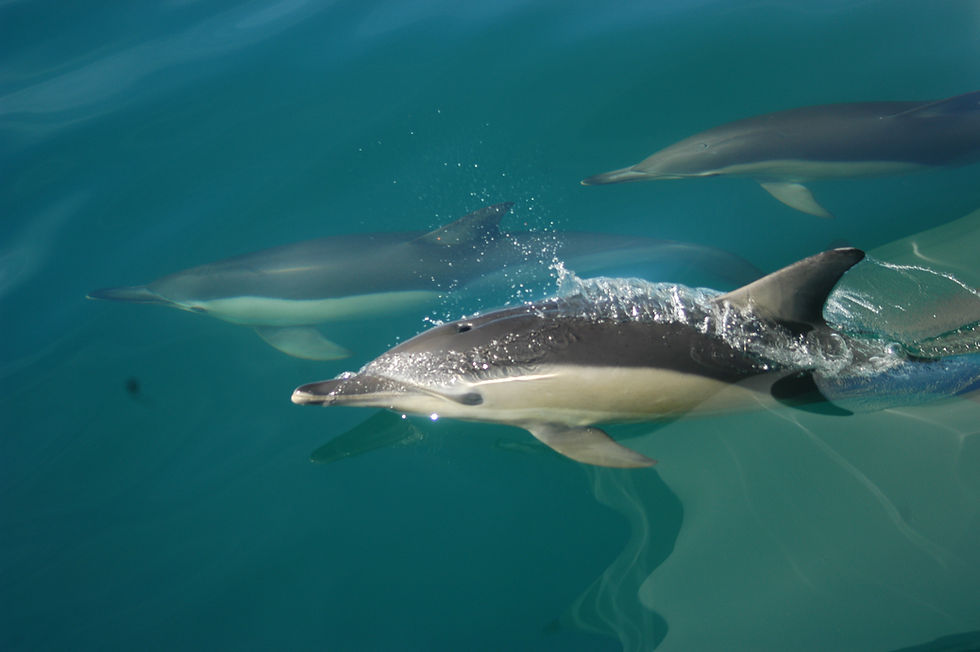
Common dolphins (Delphinus delphis) are widespread throughout New Zealand’s coastal and offshore waters and are among the most frequently sighted cetaceans in the country. They are highly social, often forming large pods that can number in the hundreds, and are known for their energetic bow-riding behaviour; however, they face threats from fishing bycatch, pollution, and habitat degradation in nearshore environments.
.jpg)
Hector’s dolphin Cephalorhynchus hectori
Hector’s dolphins (Cephalorhynchus hectori) are found only in New Zealand waters and are one of the world’s smallest and rarest marine dolphins. They live mainly around the South Island’s coastal waters, particularly off Banks Peninsula, and are classified as Nationally Endangered due to threats from gillnet and trawl fishing, as well as habitat degradation.

Dusky dolphin Lagenorhynchus obscurus
Dusky dolphins (Lagenorhynchus obscurus) are commonly found around New Zealand’s South Island, especially off Kaikōura and the Marlborough Sounds, where they feed and breed in coastal waters. They are known for their acrobatic leaping and playful behaviour, often forming large, fast-moving pods, and are considered a key species for New Zealand’s marine ecotourism industry.

Bottlenose dolphin Tursiops truncatus
Bottlenose dolphins (Tursiops truncatus) are found in several coastal regions of New Zealand, including the Bay of Islands, Fiordland, and the Marlborough Sounds. They live in small, stable groups and are highly intelligent and social, but their populations are considered Nationally Endangered due to threats from habitat disturbance, vessel traffic, and pollution in inshore waters.

Orca Orcinus orca
Orca, or killer whales (Orcinus orca), are found throughout New Zealand waters and are the country’s top marine predators. New Zealand’s orca are considered a distinct population, often seen hunting stingrays and sharks in coastal areas, particularly around the North Island. They are classified as Nationally Critical due to their small population size and threats from boat strikes, pollution, and entanglement.
Other Species

New Zealand fur seal Arctocephalus forsteri
The New Zealand fur seal, or kekeno, is one of Aotearoa’s most remarkable marine mammals and a true success story of conservation. Once hunted to near extinction for their pelts, these seals have made a powerful recovery under full protection since the 1940s. Today their populations thrive along the rocky coastlines of the South Island, Stewart Island, and parts of the North Island, reminding us of nature’s ability to heal when given the chance.

Little Blue Penguin Eudyptula minor
The Little Blue Penguin, or kororā, is the smallest penguin species in the world and one of the most beloved. Standing just 25–30 centimetres tall, these tiny seabirds emerge from the waves each evening, waddling up sandy beaches to their burrows under coastal vegetation or rocky crevices.
Kororā spend their days at sea hunting small fish and squid, sometimes travelling tens of kilometres from shore. They are strong swimmers and loyal partners, often returning to the same nesting site year after year.
Although widespread around New Zealand, kororā populations are declining in many areas due to habitat loss, introduced predators, and coastal development. Community-led restoration projects and predator-free zones are helping to protect these charming birds and ensure their songs continue to be heard along our shores.

Australasian Gannet Morus serrator
The Australasian gannet, or takapu, is one of New Zealand’s most striking seabirds. With snow-white plumage, golden head, and long pointed wings, it soars effortlessly above the ocean, diving at high speed to catch fish with precision and grace.
Breeding colonies can be found along coastal cliffs and offshore islands such as Muriwai, Cape Kidnappers, and Farewell Spit. These colonies are alive with sound, movement, and energy - each bird returning to the same nest year after year to raise its chick.
Takapu are powerful indicators of ocean health. Their numbers reflect changes in fish stocks and marine conditions, reminding us of the delicate balance between sea life and human activity. Protecting their feeding grounds and nesting sites is essential for the wellbeing of our coastal ecosystems.
.jpg)
King Shag Leucocarbo carunculatus
Found only in the Marlborough Sounds, the King Shag, or Kawau-a-toru, is one of Aotearoa’s rarest seabirds. With its glossy black plumage, bright blue eye-ring, and yellow facial caruncles, it is a true treasure of the southern seas.
This species nests on remote rocky islets and feeds by diving deep into the cool, clear waters of the Sounds. Because of its limited range, the King Shag is highly vulnerable to disturbance, pollution, and changes in the marine environment.

Albatross Diomedeidae family
The albatross, or toroa, is one of the ocean’s great wanderers, spending most of its life gliding over the open sea on wings that can span more than three metres. Known for their extraordinary grace and endurance, albatrosses embody freedom and connection to the vastness of the Pacific.
New Zealand is home to more species of albatross than anywhere else on Earth. Many breed on remote sub-Antarctic islands, while the Northern Royal Albatross returns each year to Taiaroa Head on the Otago Peninsula - the only mainland colony in the world.
Our Story
Whale and Dolphin Encounters was born from a shared love of the ocean, a respect for science, and a passion for connecting people with New Zealand’s extraordinary marine life.
Marine biologist Monika Merriman has spent over two decades studying dolphins, whales, and marine life across Aotearoa from the calm Marlborough Sounds to Kaikōura and the Hauraki Gulf, uncovering the science and stories that shape these ecosystems.
Alongside her, Elaine Subritzky brings leadership, logistics, and a deep connection to New Zealand’s coastline, ensuring each whale watching and dolphin swimming tour runs seamlessly and meaningfully.
Together, they combine research and experience to create journeys where learning meets adventure inspiring every guest to see, understand, and protect the ocean.
With a background in hospitality and leadership, Elaine Subritzky has spent her career creating thoughtful, people-centred experiences. From managing large-scale events at the historic Waitangi Treaty Grounds to curating intimate, ocean-based encounters, she brings calm professionalism and genuine care to every moment.
Elaine’s strength lies in her attention to detail, from the planning and coordination behind each experience to the way she ensures guests feel comfortable, informed, and engaged throughout. Her approach blends structure with empathy, creating an atmosphere where people can truly relax and connect.
Driven by a deep respect for nature and community, Elaine is passionate about helping others discover the beauty and wonder of the marine environment. Every experience she helps craft is designed not just to be smooth and enjoyable, but to leave guests with a lasting sense of connection to the ocean and its incredible life.


Monika Merriman has spent over two decades studying and working with marine mammals in Aotearoa New Zealand and abroad. Holding a master’s degree in marine science from Massey University, her research on bottlenose dolphins in the Marlborough Sounds revealed important patterns in abundance, habitat use, and social structure. Her influential 2009 paper, “Bottlenose Dolphin (Tursiops truncatus) Abundance, Site Fidelity, and Group Dynamics in the Marlborough Sounds, New Zealand” (Aquatic Mammals), remains a key reference for regional conservation science today.
Her extensive fieldwork spans Auckland’s Hauraki Gulf, the Marlborough Sounds, and Kaikōura, along with international research placements in the United States. With expertise in photo identification, behavioural observation, and ecological monitoring, Monika combines scientific precision with a passion for education and conservation.
Through the Marine Mammal Field Experience Program, she now invites others to explore New Zealand’s marine environments, gain hands-on research skills, and build a deeper connection with the ocean and its incredible wildlife.
Tour details
Marine Conservation Adventure
3 Weeks, 3 LocationsWeek 1 – Auckland & the Hauraki Gulf
Highlights: City culture, coastal reserves, whale & dolphin safaris, hands-on research.-
Day 1 – Arrival, welcome dinner & orientation.
-
Day 2 – Explore Matakana Markets, snorkel at Goat Island Marine Reserve, and relax at Tāwharanui beach.
-
Day 3 – Whale & dolphin safari on the Hauraki Gulf, followed by a workshop on marine data collection.
-
Day 4 – Collect real-time data on a second boat trip; learn to identify species and interpret findings.
-
Day 5 – Marine mammal research day.
-
Day 6 – Free day in Auckland city, ending with a special dinner showcasing modern NZ cuisine.
Week 2 – Marlborough Sounds
Highlights: Dolphin swims, island sanctuaries, small-group research training, stunning landscapes.-
Day 7 – Fly to Blenheim, travel to Picton, and evening lecture on local marine life.
-
Day 8 – Dolphin swim with E-Ko Tours and workshop on conservation impacts.
-
Day 9 – Visit Motuara Island Sanctuary and dolphin watch, followed by data analysis.
-
Day 10–11 – Split into small groups for practical field training: boat safety, transect surveys, GPS mapping, and photo ID.
-
Day 12 – Free day – choose from hiking the Queen Charlotte Track, wine tasting, or chocolate factory visit.
-
Day 13 – Scenic drive to Kaikōura via wineries, lavender farms, and coastal stops.
Week 3 – Kaikōura Coast
Highlights: Whale watching, private dolphin tour, cultural insights, conservation walks.-
Day 14 – Whale Watch Kaikōura expedition (sperm & humpback whales).
-
Day 15 – Private dolphin encounter and workshop on tourism’s effects on behaviour.
-
Day 16 – Big adventure day: marine encounters + zipline experience, evening talk on dolphin social structures.
-
Day 17 – Gentle Peninsula Walkway hike with seals, Whale Station visit, DOC ranger guest lecture.
-
Day 18 – Return to Blenheim, fly back to Auckland.
-
Day 19 – Final reflections & wrap-up lecture.
-
Day 20 – Departure.
For a full Itinerary please send an enquiry and we will share with you all the details!
Early Bird price $9,000.00 USD (book by November 30th 2025)
Signature price $11,500.00 USD (from 1st December 2025)
-

Winter Magic
3 Weeks, 3 LocationsWeek 1 – Auckland & the Hauraki Gulf
Highlights: City culture, coastal reserves, whale & dolphin safaris, hands-on research.-
Day 1 – Arrival, welcome dinner & orientation.
-
Day 2 – Explore Matakana Markets, snorkel at Goat Island Marine Reserve, and relax at Tāwharanui beach.
-
Day 3 – Whale & dolphin safari on the Hauraki Gulf, followed by a workshop on marine data collection.
-
Day 4 – Collect real-time data on a second boat trip; learn to identify species and interpret findings.
-
Day 5 – Marine mammal research day.
-
Day 6 – Free day in Auckland city, ending with a special dinner showcasing modern NZ cuisine.
Week 2 – Marlborough Sounds
Highlights: Dolphin swims, island sanctuaries, small-group research training, stunning landscapes.-
Day 7 – Fly to Blenheim, travel to Picton, and evening lecture on local marine life.
-
Day 8 – Dolphin swim with E-Ko Tours and workshop on conservation impacts.
-
Day 9 – Visit Motuara Island Sanctuary and dolphin watch, followed by data analysis.
-
Day 10–11 – Split into small groups for practical field training: boat safety, transect surveys, GPS mapping, and photo ID.
-
Day 12 – Free day – choose from hiking the Queen Charlotte Track, wine tasting, or chocolate factory visit.
-
Day 13 – Scenic drive to Kaikōura via wineries, lavender farms, and coastal stops.
Week 3 – Kaikōura Coast
Highlights: Whale watching, private dolphin tour, cultural insights, conservation walks.-
Day 14 – Whale Watch Kaikōura expedition (sperm & humpback whales).
-
Day 15 – Private dolphin encounter and workshop on tourism’s effects on behaviour.
-
Day 16 – Big adventure day: marine encounters + zipline experience, evening talk on dolphin social structures.
-
Day 17 – Gentle Peninsula Walkway hike with seals, Whale Station visit, DOC ranger guest lecture.
-
Day 18 – Return to Blenheim, fly back to Auckland.
-
Day 19 – Final reflections & wrap-up lecture.
-
Day 20 – Departure.
For a full Itinerary please send an enquiry and we will share with you all the details!
Early Bird price $9,000.00 USD (book by May 1st 2026)
Signature rate $11,500.00 USD (from 1st June 2026)
-

New Zealand Culture and Marine life
2 Weeks, 3 locationsWeek 1 – Auckland & Rotorua
Highlights:
Whale & dolphin safaris, hands-on marine research, cultural learning, geothermal landscapes.
Day 1 – Arrival in Auckland-
Arrive in Auckland and check into accommodation.
-
Early-evening welcome dinner.
-
Short orientation & tour overview.
Day 2 – Marine Research
-
Whale & dolphin safari on the Hauraki Gulf.
-
Introduction to marine species identification.
-
Real-time data collection with researcher guidance.
-
Relaxed dinner in Auckland (or optional early night).
Day 3 – Marine Research
-
Continue marine fieldwork.
-
Behavioural observations.
-
GPS mapping & photo-ID techniques.
-
Visit the Cetacean Ecology Research Group.
-
Research briefing
-
Special group dinner featuring modern NZ cuisine.
Week 2 – Marlborough Sounds & Kaikōura CoastHighlights: Dolphin swims, island sanctuaries, whale watching, private dolphin encounters, hands-on research training, marine science workshops, and stunning coastal landscapes.
Day 4 – Drive to Rotorua (3 hrs)-
Scenic stops en route (Wai-O-Tapu mud pools, lakes district).
-
Evening hāngi dinner and Māori cultural performance.
Day 5 – Geothermal & Cultural Learning
-
Explore Te Puia geothermal valley.
-
Māori Arts & Crafts Institute workshops.
-
Session on kaitiakitanga (guardianship) and traditional navigation.
Day 6 – Lakes & Forests of Rotorua
-
Lake Rotorua eco-walk + cultural storytelling.
-
Optional: Redwoods Treewalk, spa morning, or mountain biking.
Day 7 – Fly Rotorua to Blenheim
-
Fly Rotorua → Blenheim.
-
Shuttle/drive to Picton.
-
Evening lecture on local marine life & Sounds ecology.
Day 8 – E-Ko Dolphin Swim + Conservation Workshop
-
Dolphin swim with E-Ko Tours.
-
On-board marine interpretation.
-
Afternoon workshop on conservation impacts and responsible interactions.
Day 9 – Motuara Island Sanctuary + Dolphin Watching
-
Visit Motuara Island Sanctuary.
-
Bird monitoring & island ecology sessions.
-
Afternoon dolphin watching with E-Ko Tours.
-
Evening data analysis (species ID, behaviour patterns).
Day 10 – Practical Field Training (Small Groups)
Rotating skill sessions:-
Boat safety.
-
Transect surveys.
-
GPS mapping.
-
Photo-ID techniques.
-
Reflection & dataset review.
Day 11 – Scenic Drive to Kaikōura-
Drive Picton → Kaikōura.
-
Stops at wineries, lavender farms, and coastal lookouts.
-
Evening rest & orientation.
Day 12 – Whale Watch Kaikōura Expedition
-
Whale Watch tour: sperm whales, humpbacks (seasonal), dusky dolphins.
-
Afternoon debrief on canyon ecosystem & whale behaviour.
Day 13 – Private Dolphin Encounter + Tourism Impact Workshop
-
Private dolphin encounter (Dolphin Encounter Kaikōura).
-
Workshop: how tourism affects dolphin behaviour.
-
Optional coastal walk or beach time.
Day 14 – Big Adventure Day
-
Marine encounters or optional zipline activity (group choice).
-
Evening talk: dolphin social structures & communication.
Day 15 – Return to Auckland-
Fly Kaikōura/Blenheim → Auckland.
-
Dinner on the harbour.
-
Overnight in Auckland.
Day 16 – Departure-
Fly out from Auckland.
For a full Itinerary please send an enquiry and we will share with you all the details!
Early Bird price $6,000.00 USD (book by February 27th 2026)
Signature price $8,500.00 USD (from 1st March 2026)
-